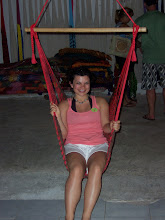
If you all have not seen my pictures posted on my Facebook page, I finished posting my pictures from Part 1 of my travels over the winter holidays, which coincide with my previous blog post. View them by clicking on the following links:
La NANI Event with Rotaract
Guanajuato and San Miguel de Allende
Guadalajara and Puerto Vallarta
Cuernavaca (and Taxco) and Puebla
Hope you enjoy!
Monday, February 1, 2010


Saturday, January 23, 2010
Tour de México Part 1
It’s January 23, 2010, and about two weeks ago I got back to Monterrey from my month-long Tour de México, with a brief hiatus in the good ol’ US of A for Christmas and New Year’s. Please bear with me as it will take me awhile to post all of the pictures (I think I have about 1500! And will probably just be posting a sampling), but here is a recount of my many adventures as I backpacked from place to place, hitting a different city every two or three days.
NANI with Rotaract: December 4-6
Before I even began my backpacking trip, I went on a weekend trip with the Rotaract Monterrey Club to Ciudad Valles, about 7 or 8 hours south of Monterrey. NANI stands for La Navidad por el Niño Indígena (Christmas for the Indigenous Child) and is an annual gathering of Rotaract clubs from the district. As with all Rotary activities, part of the weekend was focused on service, and part on fellowship. We arrived at midnight on Friday and there was a party going on in the fellowship hall of the hotel we stayed at. Members of Rotaract packed the room, dressed in Christmas costumes like angels and shepherds. There was a DJ playing all sorts of music, everyone was dancing, and delicious tamales were being served (a Christmas tradition in Mexico).
The next morning we were up early for the actual service part of the NANI. For months before, each of the clubs had been collecting different items to donate to the indigenous families in Ciudad Valles (for example, my club in Monterrey had been standing outside grocery stores asking for food donations). On that Saturday, the whole indigenous community about an hour outside of Ciudad Valles gathered together to accept the donations. It was an incredible experience. As a few hundred Rotaracts pulled up in buses, a few thousand indigenous people waited for us. We walked through a pathway lined with members of the community there, and they placed beautiful handmade flower leis on each one of us.

Then we walked down to the field where everyone in the indigenous community was gathered, and we handed out all the gifts we had brought them: everything from food and blankets to toys and school supplies for the children. There was entertainment going on simultaneously, and my friend Kristen even put on a stuffed bear suit and played with the kids!
It was an incredibly moving event; as we drove through the community, we could see how desperately they needed those items; it was not uncommon for them to have tin roofs and run-down houses. As the weather was beginning to get very cold, I was so glad we could give them things like blankets to keep them warm. One woman even came up and gave Kristen and me a hug to say thank you. Other than the knowledge that we were helping them out tremendously, one of my favorite parts was talking to the people of the community and learning some words from their language (most of them spoke both Spanish and an indigenous language)…unfortunately, I can’t remember what the words are anymore!
That night, Rotaract put on a fancy gala to commemorate the 15th anniversary of the NANI, which was a blast for me because we danced salsa! (For those of you who don’t know, I’m obsessed.). The next day we bussed back to Monterrey.
I spent the whole day after I got back from the NANI packing up my room. I decided to move this semester, and am now living with a friend from class and her brother. It’s about a 15 minute drive from campus, and in a more residential neighborhood than I was in last semester (I was literally living on one of the busiest streets in Monterrey). Now, I live up the side of the main mountain here, Cerro de la Silla, and have an incredible penthouse-style view of the other mountains and the city below!

After I ran around getting everything moved to my new house, I had just about enough time to enjoy one last leisurely dinner with several of my international friends, all of whom were leaving after the semester. Then we grabbed our bags and headed to the bus station for an overnight trip to Guanajuato!
Guanajuato: December 8-10
Guanajuato is the most picturesque town I’ve seen in Mexico. It’s a couple hours northwest of Mexico City, located in the mountains. It has a Venice-esque feel of old brick, colonial houses and narrow alley-ways, only with cobblestone pathways rather than canals. We stayed at an adorable little hotel called Casa Bertha, which had a terrace overlooking the colorfully packed houses of the city.
However, we had an even better view of the sprawl of the city when we climbed to the lookout:

We had just recently seen a new Mexican movie in the theaters called El Estudiante, and as it was filmed at the University of Guanajuato, we made sure to walk around its campus [side note: El Estudiante is about an old man who decides to return to school and enters the University of Guanajuato. It was so good it brought tears to my eyes, and although I’m not sure if it can be found in the U.S., I highly recommend that you try! It’s like a breath of fresh air seeing a movie made straight from Mexico]. Anyway, the university campus is really actually just one big building, and like everything else in the city, it is made of very old architecture; I felt like I was living 100 years ago!
Another Guanajuato favorite was the childhood house of Mexican muralist Diego Rivera, where he lived till he was ten years old. The first floor was still set up like a house, but the rest of the floors were a museum with a lot of Rivera’s work as well as some other guest artists.
Guanajuato was by far my favorite of the cities in central Mexico, so I highly recommend it to anyone who wants a true Mexican pueblo with a lot of history, cultural, architecture, landscape, and overall beauty. As with all the places I will describe in this entry, my pictures will tell a better story than my words, so once I post all of my pictures you will have a better idea of what I did and saw.
San Miguel de Allende: December 10-11
San Miguel de Allende is another cute, colonial town, but I have to say that I was spoiled with Guanajuato. However, San Miguel is blessed with countless beautiful cathedrals and churches, so we spent a lot of time just walking around taking pictures (and eating. We did a lot of eating not only here but everywhere we went!). It also had a great artisan market, where I was able to get some good Christmas shopping in.
Guadalajara: December 11-14
Although I already said that Guanajuato was my favorite city that we saw, I had the most fun in Guadalajara. As usually happens at busy hostels, we became instant best friends with the people staying at ours: an assortment from England, Scotland, Canada, Colombia, the United States, France, and then us, at this point a group from the United States, Australia, and Sweden (my travel group metamorphosed several times throughout the trip as people came and went).
Guadalajara is about five hours from Mexico’s western coast, and just a couple hours from the town of Tequila. So, needless to say, we had to tour Tequila, the birthplace of one of the best things to come out of Mexico (just kidding :P). It was a full-day tour, and included transportation, lunch, tours of two distilleries, and of course, tequila. Believe it or not, I actually learned a lot that day! At the first distillery, called “Tres Mujeres” Distillery, we learned that tequila is made from a plant called agave. And when you buy tequila in the store, make sure you look for “100% agave” written on the label, because if the percentage is less, it’s not true tequila. We went out to the fields at the distillery where the agave plants grow. They look like a huge pineapple, and there is a field worker called a jimador who uses a shovel-looking tool to slice off the big leaves, which are not needed.
Then the main part of the agave plant is squeezed into a juice and distilled to become tequila. At the end of the tour of this distillery, we sampled the main four different types of tequila that the factory produced, in order of the distillation length and darkness: “blanco” (white/clear tequila, the least distilled), “reposado,” “añejo,” and “extra añejo” (darkest and the most distilled).
The “Tres Mujeres” factory was a medium-seized distillery, and the one we toured in the afternoon was a small, family-owned distillery. The Jose Cuervo distillery was also there, but unfortunately we didn’t have a chance to tour it!
In Guadalajara, we also spent a day in Tlaquepaque, one of the best shopping markets in Mexico (i.e. more Christmas shopping!). There was a variety of artisan stands and more expensive shops. Guadalajara also has another market, one of the biggest in Mexico. Literally, it was three HUGE floors! We took advantage of some inexpensive local food there.
All in all, Guadalajara is a great cultural city with a lot of local things to do, see, and buy. One of the best things (in my opinion): it’s WARM all year round!
Puerto Vallarta: December 14-18
Puerto Vallarta is the closest beach to Guadalajara, about a five hour bus ride, so we went there next. There is not much in terms of culture or history there, but there were plenty of beautiful beaches! We ended up staying there longer than planned (we were going to go to Colima but decided to skip it), and had a wonderful time exploring the town and its various beaches. Here, too, we stayed at a great hostel, called “Hostal de les Artistes” (it was a French name – did I write it right?? I only do Spanish:) ). It was very hippy/artsy; the owner of it had made all sorts of artwork out of rolled up, painted newspaper: wall hangings, rugs, even an entire wall of our room was made of it! This hostel also had a terrace, and one night we had a barbeque with all the hostel guests and owners. Great place, great people. The only problem we had was actually finding the place! We took a cab from the bus station the night we got in, and gave the cab driver the address. Puerto Vallarta is a very hilly town, and we had him driving up and down incredibly steep hills, unable to find the place. However, the time that I was really scared for my life was when he parked the cab on a very steep hill, got out and started running up and down the hills looking at the house numbers! He left us in the cab though, and if my friend Viktor in the front seat hadn’t pulled the emergency brake tighter, we would have rolled down the hill and crashed into some houses! Thank god for Viktor’s cool mindedness.
Cuernavaca: December 18-20
Next stop after Puerto Vallarta was Cuernavaca, a 14-hour bus ride away (don’t worry, we took the overnight bus) and about an hour south of Mexico City. We weren’t here for very long, so spent our time there just walking around, taking pictures, and eating. We sampled some delicious pozole soup, made of shredded chicken and hominy corn in a spicy broth, famous to the area. Cuernavaca is small but has a city feel, with a nice central plaza with street performances and vendors.
Another story from a hostel we stayed at (notice a theme? Hostels are definitely the way to go wherever you’re traveling!): The first night we arrived in Cuernavaca, the owners of our hostel invited us to a “Posada” at the hostel that night. A Posada is the traditional Mexican Christmas celebration, where the people divide into two groups and sing a song about the Nativity, in which one group sings part and then the other group echoes it. Tamales and soup are usually served, and this is where piñatas are used! It was so cute to watch the little kids run to the candy!
Taxco: December 19
We took a day trip from Cuernavaca to the town of Taxco, a silver-mining mountain town about an hour away. I don’t know if you all read my post about Real de Catorce back in October, but Taxco reminded me a lot of Real: quiet, magical, and withdrawn from the world. When we arrived we went to what we thought was going to be an actual mine tour, but it was just a small room designed as a mine for tourists. Nevertheless, they had some wonderful silver jewelry there.
Another Taxco attraction that we took advantage of was a cable car that took us across the Taxco valley and gave us an incredible view of the mountain below, speckled with cute white houses:

Taxco is an off-the-beaten-path town where I would definitely recommend going. The main tourists we saw were Mexican!
Puebla: December 20-22
Our last stop before my brief hiatus to the U.S. for the holidays was Puebla. Puebla is east of Cuernavaca and also about an hour south of Mexico City. This city of 1.5 million was another Tour de México favorite for me. To me, Puebla is one of the Mexican cities that best gives you a sense that you are in “true Mexico” (It is a lot like Mérida, in the Yucatan peninsula. Stay tuned for a description of my time in Mérida in my next post!).
Puebla has grid-like streets and houses of identical size, all attached to each other but of every color you could imagine. It’s known for its culture of high society and conservatism, but understandably so, as it is something to be proud of. We did a bus tour that took us around all the main historical points of the city, and gave us a great sense of the colonialism that still exists there: there were churches and cathedrals on every street corner it seemed. Puebla is also a significant location in Mexico’s history, as it has the fortress that protected the locals against the French on May 5, 1862, which inspired the Cinco de Mayo celebrations that I’m sure you all celebrate now.
Puebla is also very well known for its DELICIOUS cuisine. Ever heard of mole? That’s from Puebla. Poblano pepper? Also from Puebla. Anything that has the word “poblano” in it means that it comes from Puebla. Actually, when we were there the seasonal specialty was cooked crickets, but I decided to stick with something a little bit more food-ish. It was a chicken dish with a green sauce made from pumpkin seeds called pipian verde, and it was superb. Try it if you go to Puebla!
My favorite thing about Puebla (and one of my favorite things about the whole trip) was a hole-in-the-wall coffee shop we found one night (actually, we were recommended by Lonely Planet, hands down the best travel book you can get). It was also a library and had shelves of books and a dark, relaxed ambience. It was the kind of place that only the locals know about. That night, there was an awesome jazzy salsa band, and everyone in the place got up and danced! It wasn’t even just couples; half of the people were just dancing on their own, doing their own interpretive salsa dancing. We had a blast just watching them – like most Mexicans, they knew how to dance!!
Puebla was by far the coldest place we went on our trip. One of my most vivid memories, unfortunately, was a few cooooold hours I spent in the airport on December 22, on my way home to the U.S. to celebrate the holidays with my family. The airport had no heating system, as it is normally not needed and Mexico is experiencing more cold weather this year than usual. On top of the FREEZING cold weather, my flight (which was supposed to leave at 7 a.m.) was delayed and I wasn’t sure why. So there I was, so cold I couldn’t even stand still, watching the airport workers take their time preparing the plane. I thought that’s all they were doing until I saw the plane backing away from the gate! Confused, I decided to go up and ask some men who also appeared to be on my flight. “Oh, the flight’s delayed because there was ice on the plane, and they had to wait for the sun to come up to de-ice it! Now they’re moving it around so the sun can melt the other side.” I guess when you're not used to cold weather, you don't need de-icing machines, so you resort to nature!
Stay tuned for Part 2 of my Tour de México adventures, and lots and lots of pictures!
NANI with Rotaract: December 4-6
Before I even began my backpacking trip, I went on a weekend trip with the Rotaract Monterrey Club to Ciudad Valles, about 7 or 8 hours south of Monterrey. NANI stands for La Navidad por el Niño Indígena (Christmas for the Indigenous Child) and is an annual gathering of Rotaract clubs from the district. As with all Rotary activities, part of the weekend was focused on service, and part on fellowship. We arrived at midnight on Friday and there was a party going on in the fellowship hall of the hotel we stayed at. Members of Rotaract packed the room, dressed in Christmas costumes like angels and shepherds. There was a DJ playing all sorts of music, everyone was dancing, and delicious tamales were being served (a Christmas tradition in Mexico).
The next morning we were up early for the actual service part of the NANI. For months before, each of the clubs had been collecting different items to donate to the indigenous families in Ciudad Valles (for example, my club in Monterrey had been standing outside grocery stores asking for food donations). On that Saturday, the whole indigenous community about an hour outside of Ciudad Valles gathered together to accept the donations. It was an incredible experience. As a few hundred Rotaracts pulled up in buses, a few thousand indigenous people waited for us. We walked through a pathway lined with members of the community there, and they placed beautiful handmade flower leis on each one of us.

Then we walked down to the field where everyone in the indigenous community was gathered, and we handed out all the gifts we had brought them: everything from food and blankets to toys and school supplies for the children. There was entertainment going on simultaneously, and my friend Kristen even put on a stuffed bear suit and played with the kids!
It was an incredibly moving event; as we drove through the community, we could see how desperately they needed those items; it was not uncommon for them to have tin roofs and run-down houses. As the weather was beginning to get very cold, I was so glad we could give them things like blankets to keep them warm. One woman even came up and gave Kristen and me a hug to say thank you. Other than the knowledge that we were helping them out tremendously, one of my favorite parts was talking to the people of the community and learning some words from their language (most of them spoke both Spanish and an indigenous language)…unfortunately, I can’t remember what the words are anymore!
That night, Rotaract put on a fancy gala to commemorate the 15th anniversary of the NANI, which was a blast for me because we danced salsa! (For those of you who don’t know, I’m obsessed.). The next day we bussed back to Monterrey.
I spent the whole day after I got back from the NANI packing up my room. I decided to move this semester, and am now living with a friend from class and her brother. It’s about a 15 minute drive from campus, and in a more residential neighborhood than I was in last semester (I was literally living on one of the busiest streets in Monterrey). Now, I live up the side of the main mountain here, Cerro de la Silla, and have an incredible penthouse-style view of the other mountains and the city below!

After I ran around getting everything moved to my new house, I had just about enough time to enjoy one last leisurely dinner with several of my international friends, all of whom were leaving after the semester. Then we grabbed our bags and headed to the bus station for an overnight trip to Guanajuato!
Guanajuato: December 8-10
Guanajuato is the most picturesque town I’ve seen in Mexico. It’s a couple hours northwest of Mexico City, located in the mountains. It has a Venice-esque feel of old brick, colonial houses and narrow alley-ways, only with cobblestone pathways rather than canals. We stayed at an adorable little hotel called Casa Bertha, which had a terrace overlooking the colorfully packed houses of the city.
However, we had an even better view of the sprawl of the city when we climbed to the lookout:

We had just recently seen a new Mexican movie in the theaters called El Estudiante, and as it was filmed at the University of Guanajuato, we made sure to walk around its campus [side note: El Estudiante is about an old man who decides to return to school and enters the University of Guanajuato. It was so good it brought tears to my eyes, and although I’m not sure if it can be found in the U.S., I highly recommend that you try!
 It’s like a breath of fresh air seeing a movie made straight from Mexico]. Anyway, the university campus is really actually just one big building, and like everything else in the city, it is made of very old architecture; I felt like I was living 100 years ago!
Another Guanajuato favorite was the childhood house of Mexican muralist Diego Rivera, where he lived till he was ten years old. The first floor was still set up like a house, but the rest of the floors were a museum with a lot of Rivera’s work as well as some other guest artists.
Guanajuato was by far my favorite of the cities in central Mexico, so I highly recommend it to anyone who wants a true Mexican pueblo with a lot of history, cultural, architecture, landscape, and overall beauty. As with all the places I will describe in this entry, my pictures will tell a better story than my words, so once I post all of my pictures you will have a better idea of what I did and saw.
San Miguel de Allende: December 10-11
San Miguel de Allende is another cute, colonial town, but I have to say that I was spoiled with Guanajuato. However, San Miguel is blessed with countless beautiful cathedrals and churches,
 so we spent a lot of time just walking around taking pictures (and eating. We did a lot of eating not only here but everywhere we went!). It also had a great artisan market, where I was able to get some good Christmas shopping in.
 Guadalajara: December 11-14
Although I already said that Guanajuato was my favorite city that we saw, I had the most fun in Guadalajara. As usually happens at busy hostels, we became instant best friends with the people staying at ours: an assortment from England, Scotland, Canada, Colombia, the United States, France, and then us, at this point a group from the United States, Australia, and Sweden (my travel group metamorphosed several times throughout the trip as people came and went).
Guadalajara is about five hours from Mexico’s western coast, and just a couple hours from the town of Tequila. So, needless to say, we had to tour Tequila, the birthplace of one of the best things to come out of Mexico (just kidding :P). It was a full-day tour, and included transportation, lunch, tours of two distilleries, and of course, tequila. Believe it or not, I actually learned a lot that day! At the first distillery, called “Tres Mujeres” Distillery, we learned that tequila is made from a plant called agave. And when you buy tequila in the store, make sure you look for “100% agave” written on the label, because if the percentage is less, it’s not true tequila.
 We went out to the fields at the distillery where the agave plants grow. They look like a huge pineapple, and there is a field worker called a jimador who uses a shovel-looking tool to slice off the big leaves, which are not needed.
Then the main part of the agave plant is squeezed into a juice and distilled to become tequila. At the end of the tour of this distillery, we sampled the main four different types of tequila that the factory produced, in order of the distillation length and darkness: “blanco” (white/clear tequila, the least distilled), “reposado,” “añejo,” and “extra añejo” (darkest and the most distilled).
The “Tres Mujeres” factory was a medium-seized distillery, and the one we toured in the afternoon was a small, family-owned distillery. The Jose Cuervo distillery was also there, but unfortunately we didn’t have a chance to tour it!
In Guadalajara, we also spent a day in Tlaquepaque, one of the best shopping markets in Mexico (i.e. more Christmas shopping!). There was a variety of artisan stands and more expensive shops. Guadalajara also has another market, one of the biggest in Mexico. Literally, it was three HUGE floors! We took advantage of some inexpensive local food there.
All in all, Guadalajara is a great cultural city with a lot of local things to do, see, and buy. One of the best things (in my opinion): it’s WARM all year round!
Puerto Vallarta: December 14-18
Puerto Vallarta is the closest beach to Guadalajara, about a five hour bus ride, so we went there next. There is not much in terms of culture or history there, but there were plenty of beautiful beaches! We ended up staying there longer than planned (we were going to go to Colima but decided to skip it), and had a wonderful time exploring the town and its various beaches.
 Here, too, we stayed at a great hostel, called “Hostal de les Artistes” (it was a French name – did I write it right?? I only do Spanish:) ). It was very hippy/artsy; the owner of it had made all sorts of artwork out of rolled up, painted newspaper: wall hangings, rugs, even an entire wall of our room was made of it! This hostel also had a terrace, and one night we had a barbeque with all the hostel guests and owners. Great place, great people. The only problem we had was actually finding the place! We took a cab from the bus station the night we got in, and gave the cab driver the address. Puerto Vallarta is a very hilly town, and we had him driving up and down incredibly steep hills, unable to find the place. However, the time that I was really scared for my life was when he parked the cab on a very steep hill, got out and started running up and down the hills looking at the house numbers! He left us in the cab though, and if my friend Viktor in the front seat hadn’t pulled the emergency brake tighter, we would have rolled down the hill and crashed into some houses! Thank god for Viktor’s cool mindedness.
 Cuernavaca: December 18-20
Next stop after Puerto Vallarta was Cuernavaca, a 14-hour bus ride away (don’t worry, we took the overnight bus) and about an hour south of Mexico City. We weren’t here for very long, so spent our time there just walking around, taking pictures, and eating. We sampled some delicious pozole soup, made of shredded chicken and hominy corn in a spicy broth, famous to the area. Cuernavaca is small but has a city feel, with a nice central plaza with street performances and vendors.
Another story from a hostel we stayed at (notice a theme? Hostels are definitely the way to go wherever you’re traveling!): The first night we arrived in Cuernavaca, the owners of our hostel invited us to a “Posada” at the hostel that night. A Posada is the traditional Mexican Christmas celebration, where the people divide into two groups and sing a song about the Nativity, in which one group sings part and then the other group echoes it. Tamales and soup are usually served, and this is where piñatas are used! It was so cute to watch the little kids run to the candy!
Taxco: December 19
We took a day trip from Cuernavaca to the town of Taxco, a silver-mining mountain town about an hour away. I don’t know if you all read my post about Real de Catorce back in October, but Taxco reminded me a lot of Real: quiet, magical, and withdrawn from the world. When we arrived we went to what we thought was going to be an actual mine tour, but it was just a small room designed as a mine for tourists. Nevertheless, they had some wonderful silver jewelry there.
Another Taxco attraction that we took advantage of was a cable car that took us across the Taxco valley and gave us an incredible view of the mountain below, speckled with cute white houses:

Taxco is an off-the-beaten-path town where I would definitely recommend going. The main tourists we saw were Mexican!
Puebla: December 20-22
Our last stop before my brief hiatus to the U.S. for the holidays was Puebla. Puebla is east of Cuernavaca and also about an hour south of Mexico City. This city of 1.5 million was another Tour de México favorite for me. To me, Puebla is one of the Mexican cities that best gives you a sense that you are in “true Mexico” (It is a lot like Mérida, in the Yucatan peninsula. Stay tuned for a description of my time in Mérida in my next post!).
Puebla has grid-like streets and houses of identical size, all attached to each other but of every color you could imagine. It’s known for its culture of high society and conservatism, but understandably so, as it is something to be proud of.
 We did a bus tour that took us around all the main historical points of the city, and gave us a great sense of the colonialism that still exists there: there were churches and cathedrals on every street corner it seemed. Puebla is also a significant location in Mexico’s history, as it has the fortress that protected the locals against the French on May 5, 1862, which inspired the Cinco de Mayo celebrations that I’m sure you all celebrate now.
 Puebla is also very well known for its DELICIOUS cuisine. Ever heard of mole? That’s from Puebla. Poblano pepper? Also from Puebla. Anything that has the word “poblano” in it means that it comes from Puebla. Actually, when we were there the seasonal specialty was cooked crickets, but I decided to stick with something a little bit more food-ish. It was a chicken dish with a green sauce made from pumpkin seeds called pipian verde, and it was superb. Try it if you go to Puebla!
My favorite thing about Puebla (and one of my favorite things about the whole trip) was a hole-in-the-wall coffee shop we found one night (actually, we were recommended by Lonely Planet, hands down the best travel book you can get). It was also a library and had shelves of books and a dark, relaxed ambience. It was the kind of place that only the locals know about. That night, there was an awesome jazzy salsa band, and everyone in the place got up and danced! It wasn’t even just couples; half of the people were just dancing on their own, doing their own interpretive salsa dancing. We had a blast just watching them – like most Mexicans, they knew how to dance!!
Puebla was by far the coldest place we went on our trip. One of my most vivid memories, unfortunately, was a few cooooold hours I spent in the airport on December 22, on my way home to the U.S. to celebrate the holidays with my family. The airport had no heating system, as it is normally not needed and Mexico is experiencing more cold weather this year than usual. On top of the FREEZING cold weather, my flight (which was supposed to leave at 7 a.m.) was delayed and I wasn’t sure why. So there I was, so cold I couldn’t even stand still, watching the airport workers take their time preparing the plane. I thought that’s all they were doing until I saw the plane backing away from the gate! Confused, I decided to go up and ask some men who also appeared to be on my flight. “Oh, the flight’s delayed because there was ice on the plane, and they had to wait for the sun to come up to de-ice it! Now they’re moving it around so the sun can melt the other side.” I guess when you're not used to cold weather, you don't need de-icing machines, so you resort to nature!
Stay tuned for Part 2 of my Tour de México adventures, and lots and lots of pictures!
Thursday, December 3, 2009
Pictures: Bull Fight and Thanksgiving
Click here to see pictures from both of my Thanksgivings
Click here to see pictures from a Mexican bull fight
(**Please note that this does have some pictures that might be considered disturbing, but it is worth looking at because it was an interesting cultural experience)
Click here to see pictures from a Mexican bull fight
(**Please note that this does have some pictures that might be considered disturbing, but it is worth looking at because it was an interesting cultural experience)
Tuesday, December 1, 2009
Thanksgiving in Mexico
The week before Thanksgiving, while those of you in the States were happily surrounded by Thanksgiving food, decorations, sales, and overall ambience, we Americans here in Mexico were scouring the stores for items that would be staples in the United States at this time of year. Although Monterrey is close to the U.S., not very many people celebrate Thanksgiving here. There are those few Mexican-American families who celebrate it with turkey tacos (literally, I’m sure), but for the most part, it is a holiday that goes unnoticed (for obvious reasons, since it’s American!). However, for this very reason, my American friends and I decided to take advantage of this opportunity to share one of our culture’s most important traditions with both the Mexicans and the internationals here in Monterrey. In fact, I celebrated Thanksgiving twice!:
Thanksgiving #1: For the Rotaract Club
Kristen, the other Rotary Scholar here, and I realized that we wouldn’t have a more perfect opportunity than Thanksgiving to do exactly what Rotary has given us scholarships for: to further cross-cultural understanding and friendships. Thanksgiving is an all-American holiday that in and of itself celebrates friendship between cultures – the Native Americans and the pilgrims – and so we decided to share every aspect of it with the Monterrey Rotaract club: the food, the giving thanks, and the cross-cultural friendships.
We had this Thanksgiving dinner the Sunday before Thanksgiving. Kristen and I went shopping a couple of days before, crossing our fingers that we could actually find a turkey in Mexico at this time of year. We lucked out and found one at Costco! But you would never think that shopping for a holiday that for us is such a given would be so difficult. Certain things that would be at every grocery store in the U.S. we had to search high and low for in various stores here. And other things we didn’t think we would find we actually had no problem finding! For example, we had no problem finding a turkey or an already-made pumpkin pie, but we couldn’t find pumpkin-pie filling or packaged stuffing (we eventually found the stuffing at Wal-Mart after we had already started making our own). And don’t even try to get fresh cranberries here. Canned cranberries, yes, but you have to dig! But, after going back and forth to Wal-Mart, Soriana, and Costco, we eventually got everything together for the Thanksgiving dinner.
We spent all day cooking on Sunday and the Rotaractors arrived around 7 p.m. Neither Kristen nor I had ever made a turkey before, but it turned out GREAT! Since none of our guests had ever experienced Thanksgiving before, we first told them the story of Thanksgiving, and then each of us went around and said what we were thankful for.
We also had a surprise visit from a man from England – a co-worker of one of the Rotaractors. He too was very excited to experience his first Thanksgiving. It’s good to know that after a few hundred years, there can be perfectly friendly relations between Americans and British, especially at a holiday like Thanksgiving! :) Really though, it was such a great experience to have Mexicans, Americans, and British gathered together, all politics aside, to celebrate one of our greatest holidays, which has become simply a recognition of the wonderful family and friends – of every culture and ethnicity – in one’s life.
Thanksgiving #2: For My International and Mexican Friends
On actual Thanksgiving Day, my friend Linda (from California) and I cooked Thanksgiving dinner for our international and Mexican friends here. This time I knew exactly which stores sold which products, and I knew all about preparing the turkey (turkey guts don’t phase me anymore). I have to say, I was pretty proud of the cooking skills I developed, considering that I did not even used to be able to make pasta! (Yes, even after college).
Anyway, everything turned out great for this Thanksgiving too. No one here had ever experienced the holiday either, so again, we loved being able to bring this American tradition to Mexico! Also present were people from Germany, France, Australia, and Canada.
Stay tuned for pictures – will post them soon. Happy belated Thanksgiving to everyone – hope it was wonderful!
Thanksgiving #1: For the Rotaract Club
Kristen, the other Rotary Scholar here, and I realized that we wouldn’t have a more perfect opportunity than Thanksgiving to do exactly what Rotary has given us scholarships for: to further cross-cultural understanding and friendships. Thanksgiving is an all-American holiday that in and of itself celebrates friendship between cultures – the Native Americans and the pilgrims – and so we decided to share every aspect of it with the Monterrey Rotaract club: the food, the giving thanks, and the cross-cultural friendships.
We had this Thanksgiving dinner the Sunday before Thanksgiving. Kristen and I went shopping a couple of days before, crossing our fingers that we could actually find a turkey in Mexico at this time of year. We lucked out and found one at Costco! But you would never think that shopping for a holiday that for us is such a given would be so difficult. Certain things that would be at every grocery store in the U.S. we had to search high and low for in various stores here. And other things we didn’t think we would find we actually had no problem finding! For example, we had no problem finding a turkey or an already-made pumpkin pie, but we couldn’t find pumpkin-pie filling or packaged stuffing (we eventually found the stuffing at Wal-Mart after we had already started making our own). And don’t even try to get fresh cranberries here. Canned cranberries, yes, but you have to dig! But, after going back and forth to Wal-Mart, Soriana, and Costco, we eventually got everything together for the Thanksgiving dinner.
We spent all day cooking on Sunday and the Rotaractors arrived around 7 p.m. Neither Kristen nor I had ever made a turkey before, but it turned out GREAT!
 Since none of our guests had ever experienced Thanksgiving before, we first told them the story of Thanksgiving, and then each of us went around and said what we were thankful for.
 We also had a surprise visit from a man from England – a co-worker of one of the Rotaractors. He too was very excited to experience his first Thanksgiving. It’s good to know that after a few hundred years, there can be perfectly friendly relations between Americans and British, especially at a holiday like Thanksgiving! :) Really though, it was such a great experience to have Mexicans, Americans, and British gathered together, all politics aside, to celebrate one of our greatest holidays, which has become simply a recognition of the wonderful family and friends – of every culture and ethnicity – in one’s life.
Thanksgiving #2: For My International and Mexican Friends
On actual Thanksgiving Day, my friend Linda (from California) and I cooked Thanksgiving dinner for our international and Mexican friends here. This time I knew exactly which stores sold which products, and I knew all about preparing the turkey (turkey guts don’t phase me anymore). I have to say, I was pretty proud of the cooking skills I developed, considering that I did not even used to be able to make pasta! (Yes, even after college).
Anyway, everything turned out great for this Thanksgiving too. No one here had ever experienced the holiday either, so again, we loved being able to bring this American tradition to Mexico! Also present were people from Germany, France, Australia, and Canada.
Stay tuned for pictures – will post them soon. Happy belated Thanksgiving to everyone – hope it was wonderful!
Monday, November 16, 2009
Sunday, November 15, 2009
Weekend of El Día de los Muertos
The last weekend of October was Halloween for some, but for Mexico, it was the weekend of El Día de los Muertos (Day of the Dead), one of the main celebrations that Mexico is known for, in which the deceased are remembered and believed to come back for one day. Although officially I believe el Día de los Muertos is November 2, it is really celebrated the whole weekend before. Unfortunately for me, northern Mexico celebrates Halloween more than el Día de los Muertos (it is more celebrated in the South), but there were still some celebrations here in Monterrey.
On Friday night, October 30, I went with a few friends to an indigenous spiritual cleansing ritual in the Huasteca, which are the mountains right outside of Monterrey. We had no idea what to expect from this Noche de Temazcalli (“Night of Temazcalli”), except that we would sweat a lot, so we should bring a change of clothes and some towels.
We took a bus to a cabin in the mountains – there were about 20-30 people who came. When we arrived, we all gathered around a fire as a woman – our guide - briefly explained what we would be doing. A girl came around and performed a blessing on each of us with some kind of incense. After we were blessed, we took some twigs from a bag, threw them in the fire, and got down on hands and knees to enter a tent that was there.

The tent was made of branches and covered in blankets, and looked like an igloo. As we entered on hands and knees, we bowed our heads to the ground and then crawled in and sat down. We waited as each person individually crawled into the tent, and then the guide began to explain more about what we would be doing. She told us that the door to the tent would be closed four times, and during each time we would experience the temazcalli, which is a bath of vapor made from herb-scented water being poured onto hot, volcanic rocks. It originates from the pre-Hispanic cultures of Mexico and Central America, and the purpose is to cleanse the body and soul in conjunction with the essential elements (earth, water, fire, and air).
So they closed the door four times, and each time they poured the scented water on the hot rocks in the center of the tent. The room filled up with the HOT smell of herbs – it felt like a sauna. Everyone was dripping in sweat, and occasionally I had to lean down to the floor to get some cooler air. Each time, after about 15-20 minutes, they opened the tent door up so that we would have some fresh air. During this time, they would bring in new hot rocks, and then close the door again. Four times they did that, and we were in the tent a total of about two hours.
After sweating like crazy for two hours straight, it was intense to walk outside to the crispy mountain air, because we were soaked (it was then that we understood why we were supposed to bring a change of clothes and towels!). For the next hour, we gathered around the fire, getting to know each other. Several people had brought snacks of fruit and nuts and chocolate, and while some ate theirs, others threw theirs into the fire as an offering.
Other than the Noche de Temazcalli that weekend, several student organizations at Monterrey Tech set up altars on campus in honor of El Día de los Muertos. This is a popular tradition, which honors those who have passed away. For example, there was an altar set up by the Society of Hispanic Language and Literature Students in memory of two deceased Hispanic authors. :

There was also an altar in memory of Michael Jackson and Farrah Fawcett:

And that evening in class, my teacher brought in Day of the Dead Cake, a delicious pastry/cake that is eaten on El Día de los Muertos.
On Friday night, October 30, I went with a few friends to an indigenous spiritual cleansing ritual in the Huasteca, which are the mountains right outside of Monterrey. We had no idea what to expect from this Noche de Temazcalli (“Night of Temazcalli”), except that we would sweat a lot, so we should bring a change of clothes and some towels.
We took a bus to a cabin in the mountains – there were about 20-30 people who came. When we arrived, we all gathered around a fire as a woman – our guide - briefly explained what we would be doing. A girl came around and performed a blessing on each of us with some kind of incense. After we were blessed, we took some twigs from a bag, threw them in the fire, and got down on hands and knees to enter a tent that was there.

The tent was made of branches and covered in blankets, and looked like an igloo. As we entered on hands and knees, we bowed our heads to the ground and then crawled in and sat down. We waited as each person individually crawled into the tent, and then the guide began to explain more about what we would be doing. She told us that the door to the tent would be closed four times, and during each time we would experience the temazcalli, which is a bath of vapor made from herb-scented water being poured onto hot, volcanic rocks. It originates from the pre-Hispanic cultures of Mexico and Central America, and the purpose is to cleanse the body and soul in conjunction with the essential elements (earth, water, fire, and air).
So they closed the door four times, and each time they poured the scented water on the hot rocks in the center of the tent. The room filled up with the HOT smell of herbs – it felt like a sauna. Everyone was dripping in sweat, and occasionally I had to lean down to the floor to get some cooler air. Each time, after about 15-20 minutes, they opened the tent door up so that we would have some fresh air. During this time, they would bring in new hot rocks, and then close the door again. Four times they did that, and we were in the tent a total of about two hours.
After sweating like crazy for two hours straight, it was intense to walk outside to the crispy mountain air, because we were soaked (it was then that we understood why we were supposed to bring a change of clothes and towels!). For the next hour, we gathered around the fire, getting to know each other. Several people had brought snacks of fruit and nuts and chocolate, and while some ate theirs, others threw theirs into the fire as an offering.
Other than the Noche de Temazcalli that weekend, several student organizations at Monterrey Tech set up altars on campus in honor of El Día de los Muertos. This is a popular tradition, which honors those who have passed away. For example, there was an altar set up by the Society of Hispanic Language and Literature Students in memory of two deceased Hispanic authors. :

There was also an altar in memory of Michael Jackson and Farrah Fawcett:

And that evening in class, my teacher brought in Day of the Dead Cake, a delicious pastry/cake that is eaten on El Día de los Muertos.
Sunday, November 1, 2009
Pictures from Real de Catorce Trip...
...are posted! You can see more of the beauty that is Mexico here:
Weekend Trip to Real de Catorce
Saludos!
-Emily
Weekend Trip to Real de Catorce
Saludos!
-Emily
Subscribe to:
Posts (Atom)